
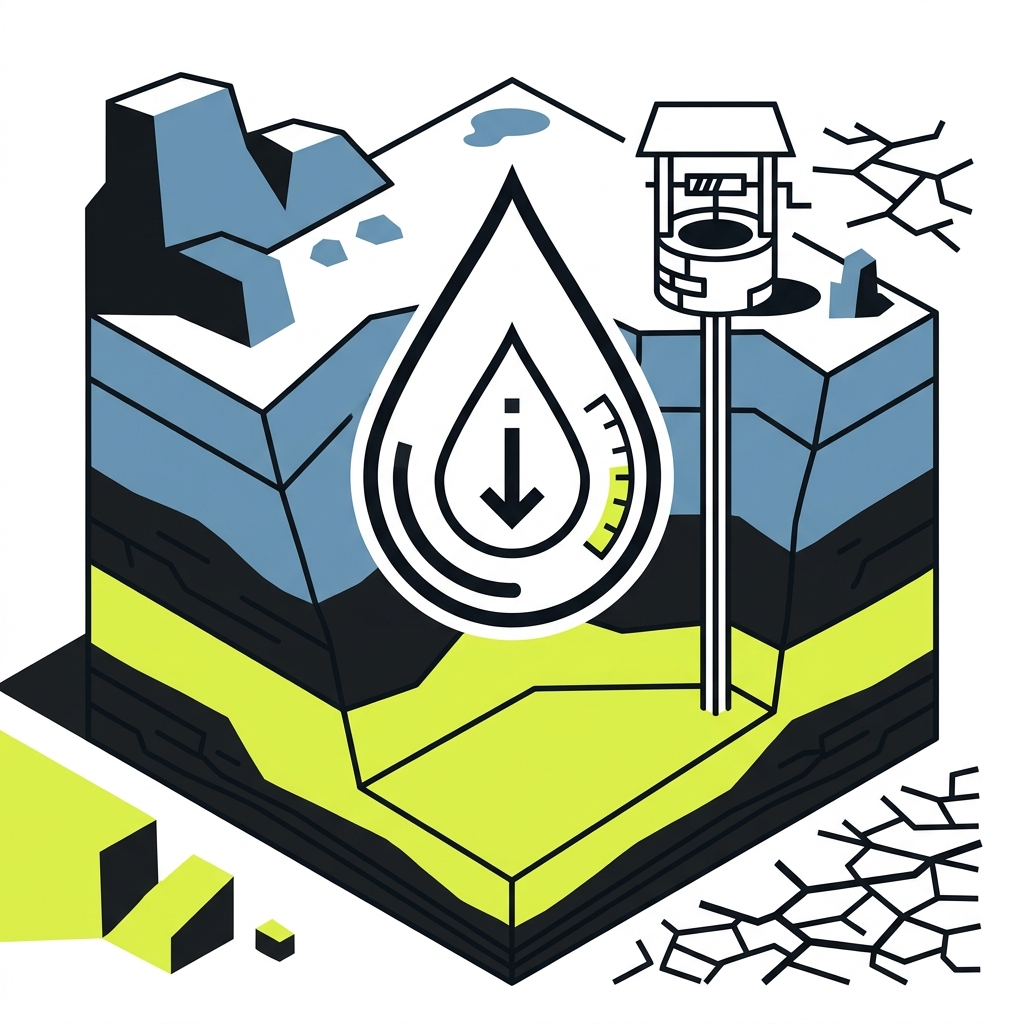
Beneath the Sahara, water older than the last ice age sits in vast sandstone aquifers — the Nubian Sandstone and the Murzuk Basin. This fossil water has no meaningful recharge. Rain that fell 30,000 years ago is being pumped today to irrigate farms, fill reservoirs and supply cities. The Great Man-Made River (GMMR) — the world’s largest irrigation project — was designed to carry this water north. But what happens when the source runs low?
The engineering marvel that time is testing
The GMMR stretches over 4,000 kilometres of pipeline, delivering an estimated 6.5 million cubic metres of water daily at peak capacity. When Muammar Gaddafi inaugurated Phase I in 1991, it was celebrated as the “Eighth Wonder of the World.” The promise was simple: endless desert water for a growing coastal population.
Thirty-five years later, the system tells a different story. Conflict since 2011 has damaged critical segments. Maintenance crews operate under threat. Several pumping stations run at reduced capacity. And the aquifer levels — monitored by a shrinking team of hydrologists in Sebha — continue to drop.
“We measure the water table every quarter. In the Murzuk Basin wells, we’ve documented a steady decline of 0.8 metres per year over the last decade. At this rate, extraction costs will become unsustainable within 25 to 40 years.”
HYDROLOGIST · SEBHA WATER AUTHORITY
Voices from Sebha
In Sebha, Libya’s largest southern city, the relationship with water is intimate and daily. Residents describe wells that used to hit water at 15 metres now needing to drill past 40. Farmers in the surrounding oases report declining yields from date palms — traditionally irrigated by shallow wells — as the water table retreats below root depth.
The hydrologists we spoke to are clear-eyed: the GMMR buys time, but it doesn’t create water. Libya’s total renewable freshwater resources are among the lowest in the world at 95 cubic metres per person per year — compared to the global average of over 5,000.
The climate overlay
Climate change is accelerating the problem from two directions. Rising temperatures increase evaporation from open reservoirs and agricultural fields, meaning more water is needed to achieve the same irrigation outcomes. Simultaneously, the negligible rainfall that does occur in southern Libya is becoming even more erratic, reducing the already tiny natural recharge.
Tasami is committed to amplifying the voices of researchers and communities living on the front line of Libya’s water crisis. This story is part of our Libyan Voices series — because the data is global, but the address is always local.