
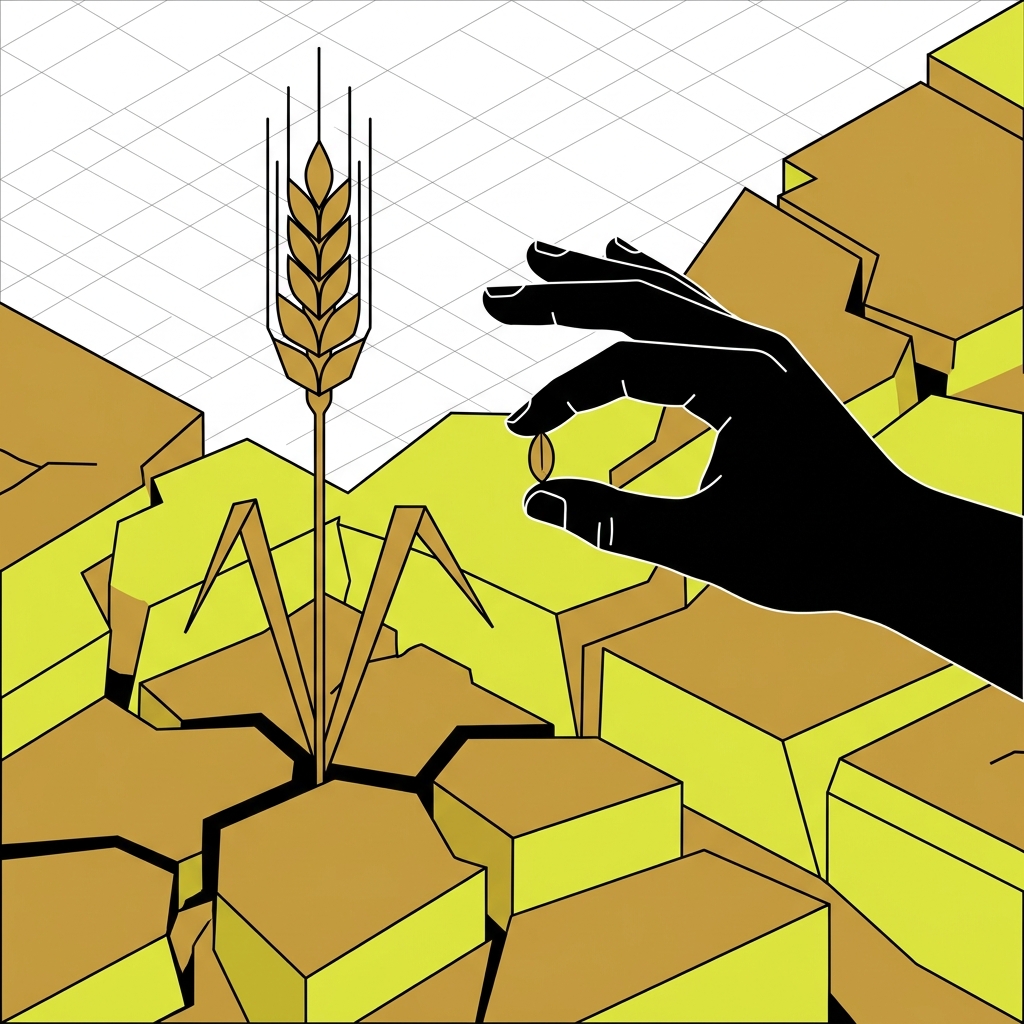
Walk through any Tripoli bakery in the early morning and the price chalked on the wall tells you more about global climate disruption than any UN briefing. Libya imports over 75% of its calories — wheat from Ukraine and Russia, rice from Asia, cooking oil from Southeast Asia. When a drought hits the Black Sea breadbasket or a heatwave scorches North African harvests, the transmission to Libyan dinner tables is direct and fast.
A country that eats from abroad
Libya’s food import dependency is among the highest in the MENA region. The Jefara Plain — once the country’s most productive agricultural zone — has seen its water table drop by over 20 metres in the past three decades. Rain-fed agriculture, which historically supported olive groves and cereal crops, now contributes less than 5% of national caloric intake.
The Great Man-Made River (GMMR) was designed to offset this by piping fossil water from the Saharan aquifers to coastal farms and cities. But the system was built for a population half the current size, and its infrastructure has degraded significantly since 2011. Sections are offline for months at a time due to conflict damage and maintenance backlogs.
“When the wheat price spikes in Odessa, the bread queue grows in Misrata. Climate is the thread that connects them, but almost nobody in Libya is talking about it.”
FIELD INTERVIEW · TASAMI EDITORIAL
The climate-price transmission
In 2022, the combined effect of the Ukraine conflict and consecutive heatwaves across Southern Europe triggered a 40% spike in imported wheat prices in Libyan markets. Subsidised bread — a cornerstone of the social contract in Libya — became harder for the state to maintain at stable prices.
This is the pattern that climate models predict will intensify: more frequent extreme weather events disrupting global supply chains, hitting import-dependent nations hardest. For Libya, where political instability already limits domestic agricultural investment, the compounding risk is severe.
What can be done
There are no quick fixes, but three paths offer partial resilience. First, targeted investment in drought-resistant crops suited to the Jefara and Fezzan climates. Second, strategic grain reserves sized for at least 90 days of national consumption. Third, diversifying import partners beyond the Black Sea corridor. Tasami will continue mapping these food security indicators as part of our Climate Realities coverage.
The price of bread is not an economic story. It is a climate story — and it is being written on Libyan tables every day.